In 2026, cost control and customer service are the same strategy
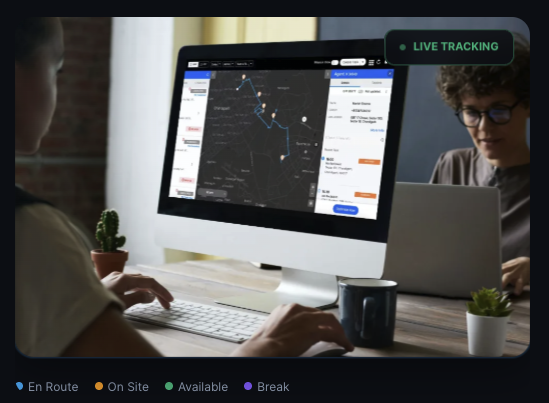
Every field-service operator knows the familiar 8:15 a.m. scramble. A technician is delayed, an appointment moves, the dispatcher begins calling around, and the customer is left wondering whether anyone is coming. One change can create overtime, wasted windshield time, a frustrated team, and a customer who starts comparing alternatives.
That is why the most resilient service companies will not treat cost control and customer service as separate initiatives in 2026. They will treat them as the same operating system. When dispatch is intelligent, work is visible, and updates are proactive, teams spend less time reacting. Customers experience a service provider that is easier to trust.
The data shows that the opportunity is real. Salesforce’s January 2026 field-service research found that 47% of appointments do not go as planned, while technicians lose 18% of working hours—more than seven hours a week—to administrative work. Those are not merely operational inconveniences. They are capacity, margin, and customer-experience problems occurring at the same time.
For companies in HVAC, construction, logistics, delivery, and other mobile-workforce businesses, AI-powered dispatch software can create a practical advantage: control the avoidable cost of chaos, deliver a better client experience, and become the provider customers prefer before a quote becomes a price comparison.
The high cost of inefficiency is also a customer-experience cost
When schedules change, the impact does not stop at the dispatcher’s screen. Every manual reassignment, missing work-order detail, unnecessary call, repeat visit, or customer chasing an ETA creates friction across the business. The result is a more expensive operation and an experience that feels less reliable to the client.
“47% of appointments don’t go as planned.” — Salesforce Field Service and Operations Guide, January 2026
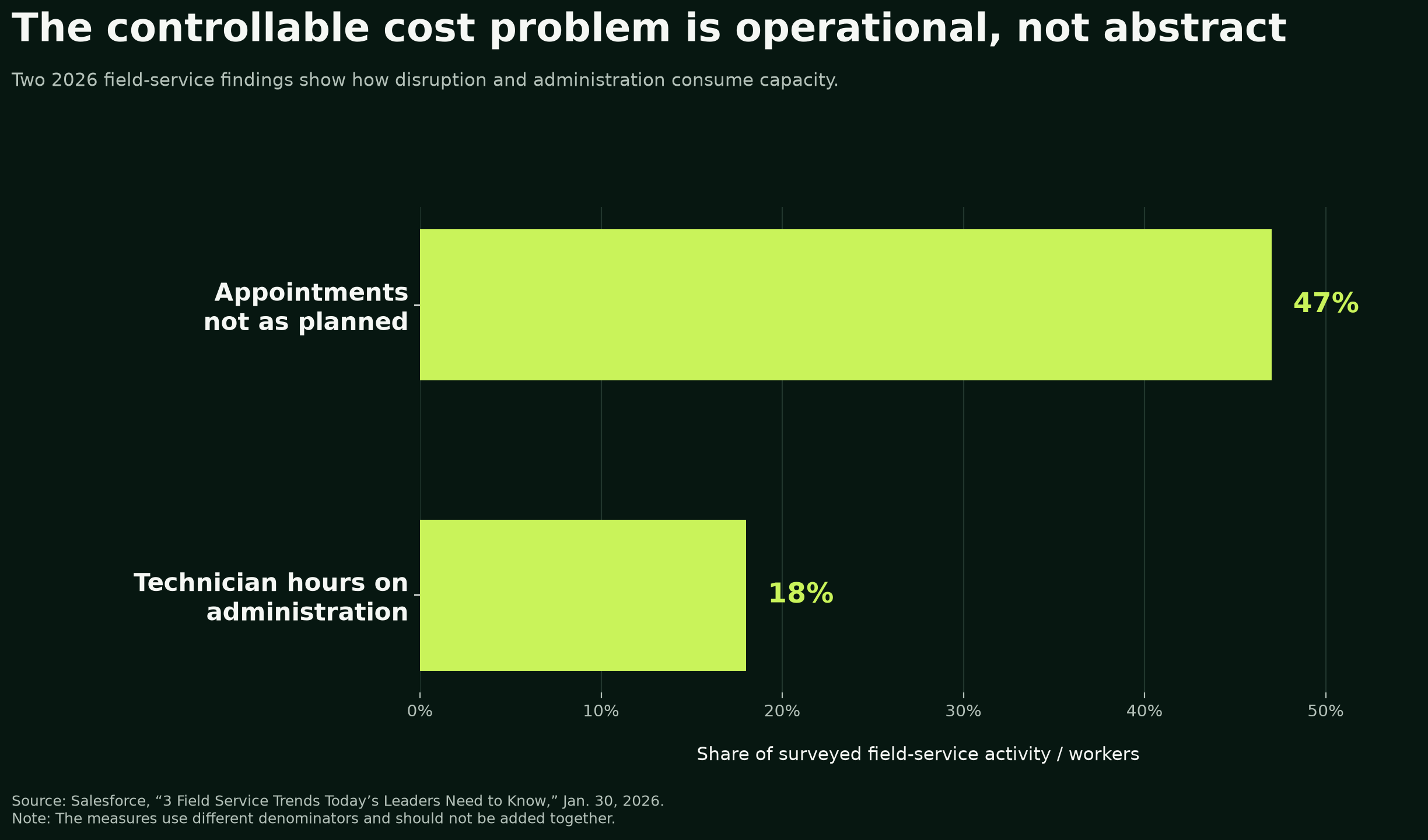
Figure 1. Operational disruption and administrative burden consume field-service capacity. Source: Salesforce, January 2026.
The implication is not that every change can be eliminated. Weather, customer availability, parts delays, and emergency work are part of field operations. The goal is to make each exception cheaper to resolve and less visible as frustration to the customer.
That requires turning scattered operational signals into coordinated action. A connected dispatch workflow can help operations teams see the issue, identify the best available technician, update the job, notify the client, and preserve the full context for the next person involved. This is where field service management software moves beyond a digital calendar. It becomes an operational control layer.
Recent field-service research points to the payoff of applying technology to those practical workflows. Geotab reported that 93% of surveyed field-service leaders had at least partially implemented AI in operations. Among those surveyed, 88% said AI and new technology were improving asset uptime, reducing service costs, and improving customer experience overall; 75% said the technology enhanced first-time-fix rates. These are reported survey outcomes, not a guarantee of results, but they show why cost and service should be designed together.
The preferred provider is easier to do business with
Customers do not experience your org chart. They experience a promise: Will you arrive when you said you would? Will I know if plans change? Will the technician have the information to solve the problem? Will I need to follow up?
A strong answer to those questions builds more than satisfaction. It builds preference. In PwC’s 2025 survey of 5,511 U.S. consumers, 52% said they had stopped using or buying from a brand after a bad product or service experience. Twenty-nine percent said they had stopped because of poor online or in-person customer experience.
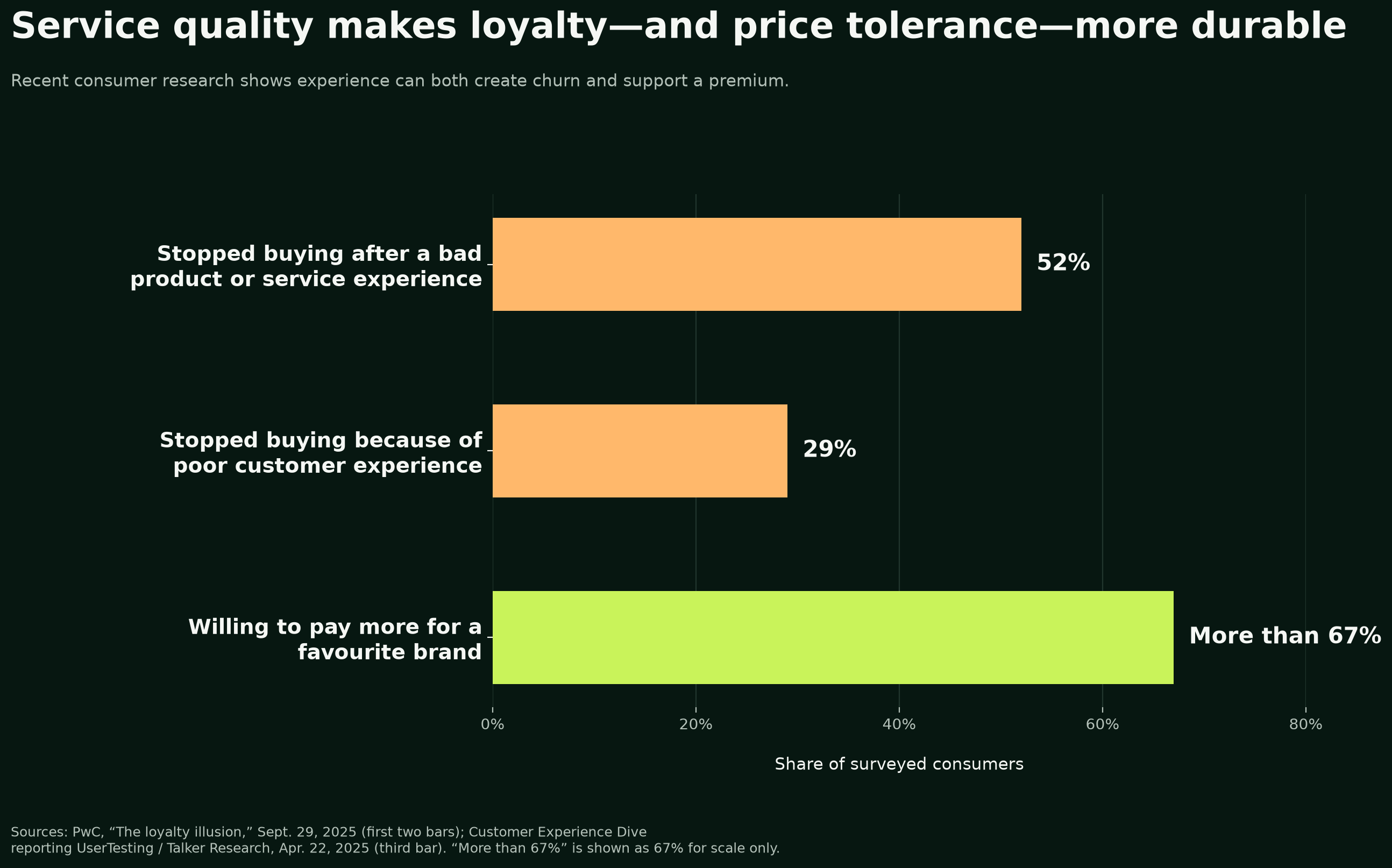
Figure 2. Recent consumer research shows that experience can create churn or support a premium. Sources: PwC, September 2025; Customer Experience Dive reporting UserTesting/Talker Research, April 2025.
These are consumer findings, so they should not be projected as a direct field-service churn rate. However, the strategic lesson transfers: service quality affects whether a customer continues the relationship and whether the decision is judged primarily on price.
The price side of the equation is equally important. Customer Experience Dive reported that more than two-thirds of respondents in a 4,000-person UserTesting study were willing to pay an average of 25% more for their favourite brands. The same reporting identified positive experiences, consistent quality, and familiarity as loyalty drivers. Again, this is consumer research rather than a field-service pricing study. It does not mean a contractor or logistics provider can automatically charge 25% more. It does show the commercial principle: when customers trust that delivery will be reliable and effortless, the decision becomes less price-only.
In B2B buying, preferred-provider status can form before a seller ever speaks to a prospect. In a 2025 global study of more than 4,000 B2B buyers, 6sense found that 94% of buying groups ranked preferred vendors before first contact, and the preliminary favourite went on to win 77% of the time. For field-service businesses, the conclusion is clear: every completed job, status update, review, and referral contributes to the reputation a future buyer brings into the selection process.
A better way: Connect dispatch, field execution, and client communication
The practical route to lower cost and better service is not “add AI everywhere.” It is to apply intelligence to the high-frequency moments where field operations already lose time and client confidence.
Start with dispatch. An AI-supported dispatch workflow can help route work to the best available qualified technician based on location, schedule, job type, skills, and live changes. The dispatcher still controls the operation, but the system reduces manual searching and helps turn exceptions into a guided decision rather than a fire drill.
Next, give technicians one reliable source of job context. Technicians should not have to hunt for customer history, job details, attachments, or the next best action. When the field team has the right information before arrival, it is easier to protect first-time-fix performance, reduce repeat trips, and keep productive labour focused on skilled work.
Then make the customer journey visible and proactive. Clients should receive useful, timely updates—not a generic confirmation that leaves them calling for a status check. Live ETA information, appointment updates, and two-way in-app messaging help customers plan around the service event. The same workflow reduces inbound “Where is the technician?” calls that pull dispatchers away from higher-value coordination.
Finally, measure the combined effect. Track operational indicators such as schedule changes, drive time, overtime, technician utilisation, administrative time, repeat visits, and first-time-fix rate. Pair them with customer indicators such as missed appointment windows, ETA-update delivery, inbound status requests, response time, review themes, and rebook or renewal rate. The objective is not to prove that one software feature caused every outcome. It is to make the relationship between operational reliability and customer trust visible enough to improve.
The “Uber-like” experience in action
Consider a commercial HVAC company managing a full day of planned maintenance calls. At 10:30 a.m., the first technician discovers an urgent issue that will extend the appointment. In a fragmented operation, the dispatcher receives a late phone call, checks multiple screens, calls another technician, and then begins contacting customers. The next client learns about the delay only after waiting past the original window. The team has incurred coordination cost, and the customer has experienced uncertainty.
Now consider the same exception in a connected workflow. The technician updates the job from the field. The dispatch team sees the delay on a live map and identifies the closest qualified technician with capacity. The affected client receives an automated, branded update with a revised ETA and a way to communicate if needed. The new technician receives the job context before arrival. The customer is still inconvenienced, but not ignored.
That is what an Uber-like experience for your team and your customers means in a field-service context. It is not a gimmick or a consumer-app imitation. It is a commitment to visible progress, realistic expectations, and fast recovery when the day changes.
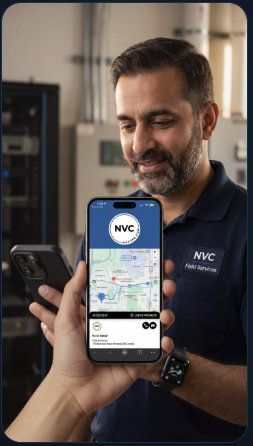
NVC360 is built around that operating model. It helps teams create and assign jobs quickly, see field activity through live GPS tracking, automate ETAs, and keep technicians, managers, and customers aligned through real-time communication. The result is a more controlled workflow for the business and a more confident experience for the customer.
How to put AI-powered dispatch to work without adding complexity
The best first use cases are specific, measurable, and close to daily pain. Begin with one service region, team, or job type where schedule changes, customer status calls, or manual dispatch coordination are common. Establish a baseline before changing the workflow.
Then define the exception path. Decide what should happen when a technician is running late, a job is rescheduled, a customer does not answer, or the work requires a different skill set. Automation should move routine updates forward, while dispatchers and technicians retain the ability to handle important context and customer judgement.
Finally, review results weekly. Has the team reduced manual status calls? Are customers receiving earlier notice of changes? Is the organisation protecting technician time from administration? Are repeat visits declining? Consistent improvement in these operating measures is how a company earns a reputation for being dependable.
Conclusion: The field-service winners will compete on certainty, not just price
The winning field-service businesses in 2026 and beyond will not rely on cost cutting alone. They will remove waste from the work while making service feel more reliable, more transparent, and easier for customers to manage.
AI-powered dispatch, real-time technician tracking, and client communication automation make that possible. They help companies protect labour capacity, recover faster from inevitable change, and deliver the confidence that turns a one-time service call into a preferred-provider relationship.
Control the cost of operational friction. Deliver the service experience customers remember. Become the provider they prefer before price becomes the only conversation.
Ready to turn dispatch into a competitive advantage?
Request Beta Access to NVC360 to see how a connected field-operations and client-communication platform can help your team dispatch smarter, communicate proactively, and deliver an Uber-like experience for every job.
References
[1] Salesforce: 3 Field Service Trends Today’s Leaders Need to Know
[2] Geotab: 88% of Field Service Companies Using AI and New Solutions See Uptime Boost
[3] PwC: The loyalty illusion—Why companies think they’re winning when customers are walking away
[5] 6sense: The Timeline for Influencing B2B Buyers Is Shrinking
Leave a Reply