

Introduction: The Problem
In the fast-paced world of field service, every minute counts. Yet, many businesses find themselves caught in a relentless cycle of
phone calls—office to technician, technician to customer, customer back to office—a phenomenon commonly known as “phone tag.” This seemingly innocuous back-and-forth isn’t just a minor annoyance; it’s a significant drain on productivity, customer satisfaction, and ultimately, your bottom line. This article will delve into the quantitative costs of these communication breakdowns and reveal how NVC360’s platform offers a transformative solution.
The High Cost of Inefficiency
The financial toll of poor communication in the workplace is staggering, impacting businesses across all sectors, especially in dynamic field service environments. Studies have consistently shown that communication barriers lead to substantial productivity losses and operational inefficiencies.
According to SIS International Research, the cumulative annual cost due to productivity losses from communication barriers can exceed $26,000 per employee annually . For a business with just 100 employees, this translates to over $530,000 annually in downtime simply for clarifying miscommunications . The Economist Intelligence Unit further reports that poor communication contributes to delayed or failed projects for 44% of companies surveyed, driving up expenses and hindering growth . The total annual cost attributed to miscommunication and unclear expectations across companies is estimated at a colossal $37 billion .
Beyond general workplace inefficiencies, the field service industry faces unique challenges, particularly with missed calls and the dreaded
“phone tag” cycle. New industry data for 2026 reveals that the average small business is losing over $26,000 per year directly to missed calls, with some service-based businesses experiencing losses exceeding $126,000 .
The “Silence Tax” on Small Business:
•62% of calls to small businesses go unanswered .
•85% of potential clients will not call back if their initial call is missed .
•78% of customers buy from the first responder, highlighting the critical importance of immediate communication .
Consider a plumbing business where the average job is worth $450. If just one viable lead is missed per day, this could result in a loss of $112,500 per year in potential revenue . This isn’t just about lost immediate revenue; it’s about the Lifetime Value (LTV) of a client, which can range from $5,000 to $50,000 depending on the industry .
Dispatchers and office staff also bear a significant burden from these communication inefficiencies. Manual scheduling alone wastes an average of 15 hours per week for dispatchers, translating to over $30,000 in lost productivity annually per dispatcher . Furthermore, a lack of real-time communication leads to an average of 45-minute delays per job . These delays not only frustrate customers but also reduce the number of jobs technicians can complete in a day.
“Poor communication is more than just an inconvenience—it carries significant costs that can hinder an organization’s financial performance, employee well-being, and overall reputation.”
A Better Way: Streamlining Field Work and Communication
The good news is that these inefficiencies are not inevitable. Modern technology offers powerful solutions to transform field service operations, eliminating the costly
“phone tag” cycle and boosting productivity. By leveraging integrated platforms, field service businesses can achieve real-time communication, optimize scheduling, and significantly enhance both technician efficiency and customer satisfaction.
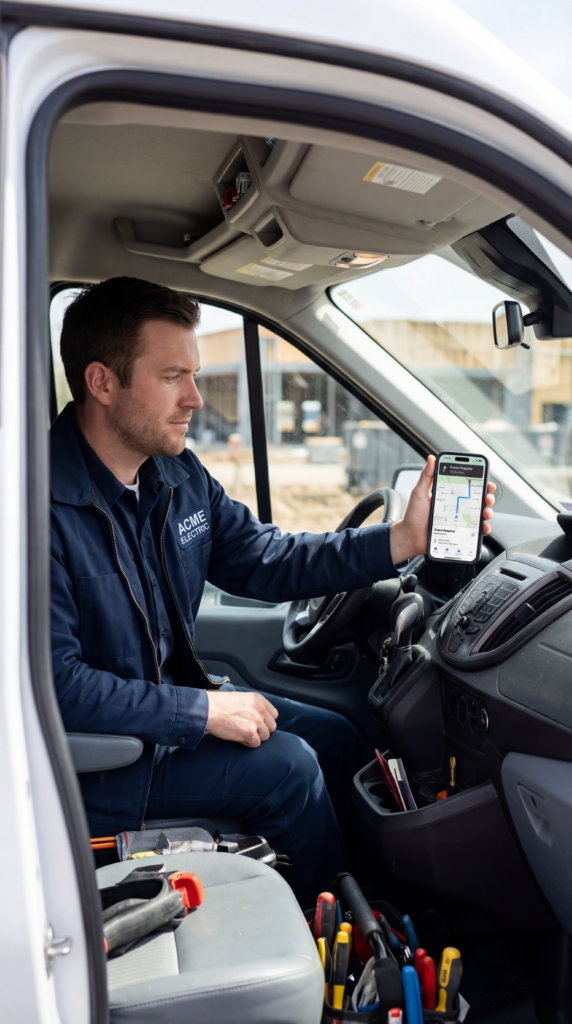
Mobile technology has revolutionized field service, with 93% of service organizations reporting increased productivity after implementing mobile solutions . Technicians equipped with mobile apps can complete an average of 2.3 additional jobs per day compared to those using paper-based systems . Real-time access to customer history, equipment manuals, and parts availability reduces job completion time by an average of 32 minutes per service call . This direct access to information significantly reduces the need for technicians to call the office for details, cutting down on the “phone tag” that plagues traditional operations.
The impact on first-time fix rates is equally impressive. Organizations using mobile field service management solutions report an 18% improvement in first-time fix rates within the first six months . Mobile access to knowledge bases and remote expert support enables technicians to resolve 76% of issues without callbacks . This not only saves time and resources but also dramatically improves customer satisfaction.
The “Uber-Like” Experience in Action
Imagine a scenario where a customer schedules a service appointment, and from that moment, they are kept informed every step of the way, just like tracking an Uber ride or a pizza delivery. This is the “Uber-like” experience that NVC360 brings to field service.
With NVC360, the endless cycle of calls between the office, technicians, and homeowners becomes a thing of the past. When a job is dispatched, the technician receives all necessary details directly on their mobile device. The customer receives automated notifications, including the technician’s estimated time of arrival (ETA) and real-time tracking of their location. If there’s a delay, the system automatically updates the customer, eliminating the need for the office to make multiple calls.
This seamless communication flow means:
•Reduced Office Workload: Dispatchers are freed from repetitive status update calls, allowing them to focus on more complex scheduling and operational tasks. This can save an average of 15 hours per week per dispatcher .
•Increased Technician Efficiency: Technicians spend less time on the phone and more time on the job, leading to more completed service calls per day and higher revenue.
•Enhanced Customer Satisfaction: Customers appreciate the transparency and proactive communication, leading to higher satisfaction scores and increased loyalty. 84% of customers expect real-time technician tracking, and those who receive proactive updates are 3.5 times more likely to recommend a service provider .
•Elimination of “Phone Tag”: All parties have access to real-time information, drastically reducing miscommunications and the need for constant phone calls.
NVC360 transforms the traditional, reactive field service model into a proactive, efficient, and customer-centric operation. It bridges the communication gap, turning potential frustrations into seamless experiences.
Conclusion: The Future of Field Service
The quantitative costs of communication inefficiencies and “phone tag” in field service businesses are undeniable. From lost revenue due to missed calls to reduced productivity from constant interruptions, these issues significantly impact profitability and growth. However, the solution is clear: embracing modern, integrated platforms that prioritize real-time communication and transparency.
NVC360 provides the tools necessary to move beyond outdated communication methods, offering an “Uber-like” experience for both your team and your customers. By streamlining operations, empowering technicians, and keeping customers informed, NVC360 helps businesses save money, boost efficiency, and build lasting customer relationships.
Ready to transform your field service operations?
Request Beta Access to NVC360 and start delivering an “Uber-like” experience to your customers.
Pgasialogin makes getting into the game super easy, which I appreciate. Nothing worse than a complicated login! Good stuff. pgasialogin
Phfum is quickly becoming one of my go-to sites. I enjoy the variety they have and the overall experience. You might too! phfum
Needed a reliable place to download and phfundownload did not disappoint. Easy, quick, and got what I was looking for. phfundownload